Finance
Key driver: People
Lost Card Lifeline
When you lose your card you're worried about fraud and you can't pay for anything. At Chase, more than 800,000 customers a month tried to sort this out themselves and around 40% dropped out of the digital journey. Replacement calls cost the bank more than $12M a year.
Organisation
JPMorganChase, New York
When
Jul 2023 – Jan 2024
Role
Service Design Lead for Journey
Scope
3 of the bank's top priority journeys
~30%
fewer calls
~25%
more digital adoption
~40%
faster resolution
Why this journey
Chase's NPS was rising more slowly than leadership wanted. We piloted a new way of finding and fixing problems and of those 16 top journeys with the lowest satisfaction and highest friction, 3 were chosen to pilot. Card replacement was one of them.
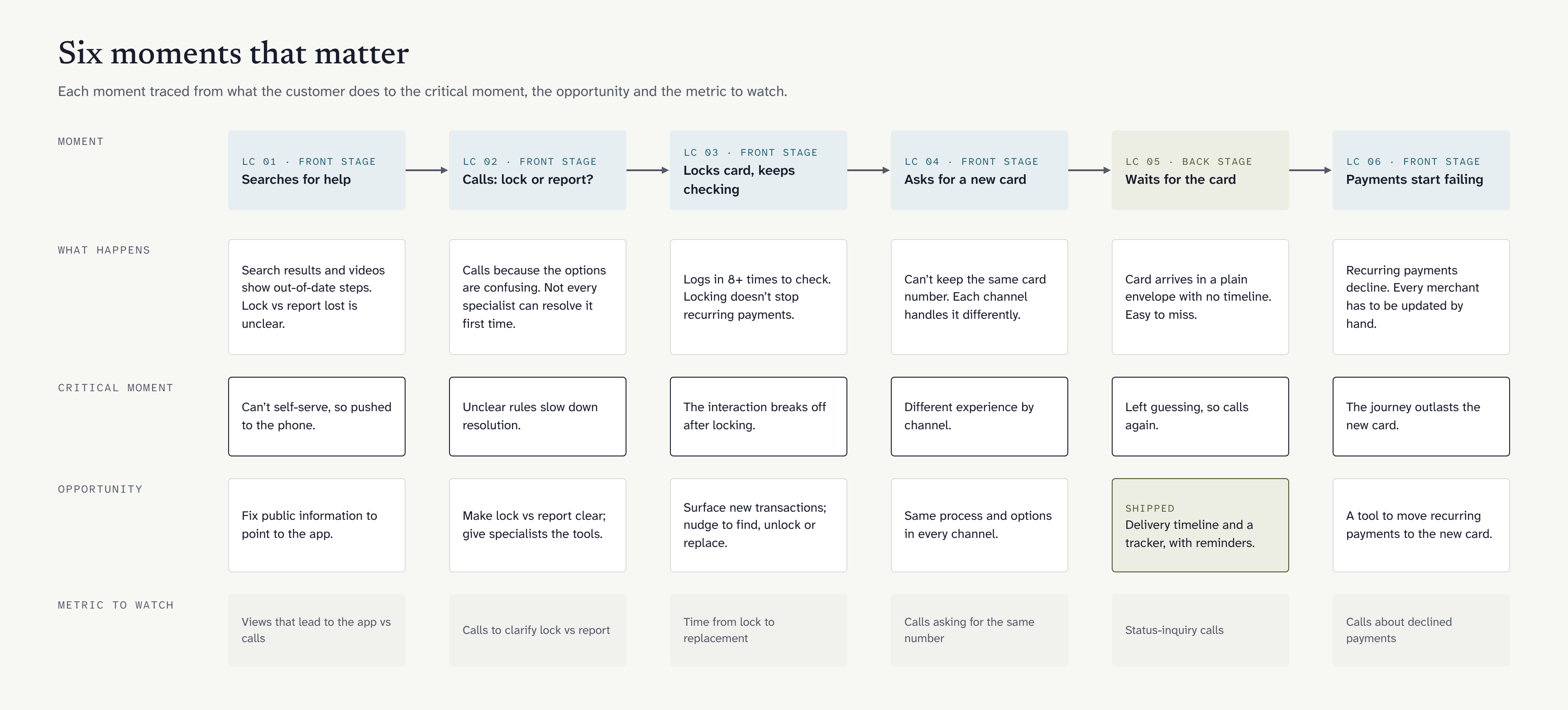
Meet James

James realises his card is gone. The instructions he finds online are wrong.

He calls, and gets confused between locking the card and reporting it lost.

He keeps logging in to check. Customers logged in more than 8 times on average while they waited.

He asks for a replacement over the phone.

He waits with no updates. On average more than two weeks passed before a new card was first used.
His subscriptions start failing, because the new card has a different expiry date and security code.
What we found
Across 10 products we logged 30+ gaps in the experience. For card replacement, people didn't understand the difference between locking a card and reporting it lost, so they called. Search results sent people to out-of-date instructions, driving more than 10,000 extra calls a month. In a single month, more than 130,000 customers called and thousands went to a branch for something they could have done in the app. Even after the card was replaced, recurring payments kept failing for up to six months, with more than 3,000 calls in the 30 days after a replacement.
“I was told that the expiration date and the security code would remain the same for my replacement card.” Customer, survey
“When a client is in front of us, I wish I could flag the transactions for the fraud specialist.” Branch specialist
“Not knowing is nerve racking.” Customer, co-creation session
The real problem
The real problem was burried deep. This experience was brought together by 12 teams, each with its own roadmap and KPIs, with no shared view of the journey. Their changes worked against each other. We created an end-to-end journey view with the customer's experience as the compass and created a shared view of their roadmaps to highlight dependecies. We also realigned 170+ team KPIs to 5 shared journey ones: NPS, digital self-service, channel containment, first-call resolution, and average handle time.
170+ → 5
KPIs
Designing it together
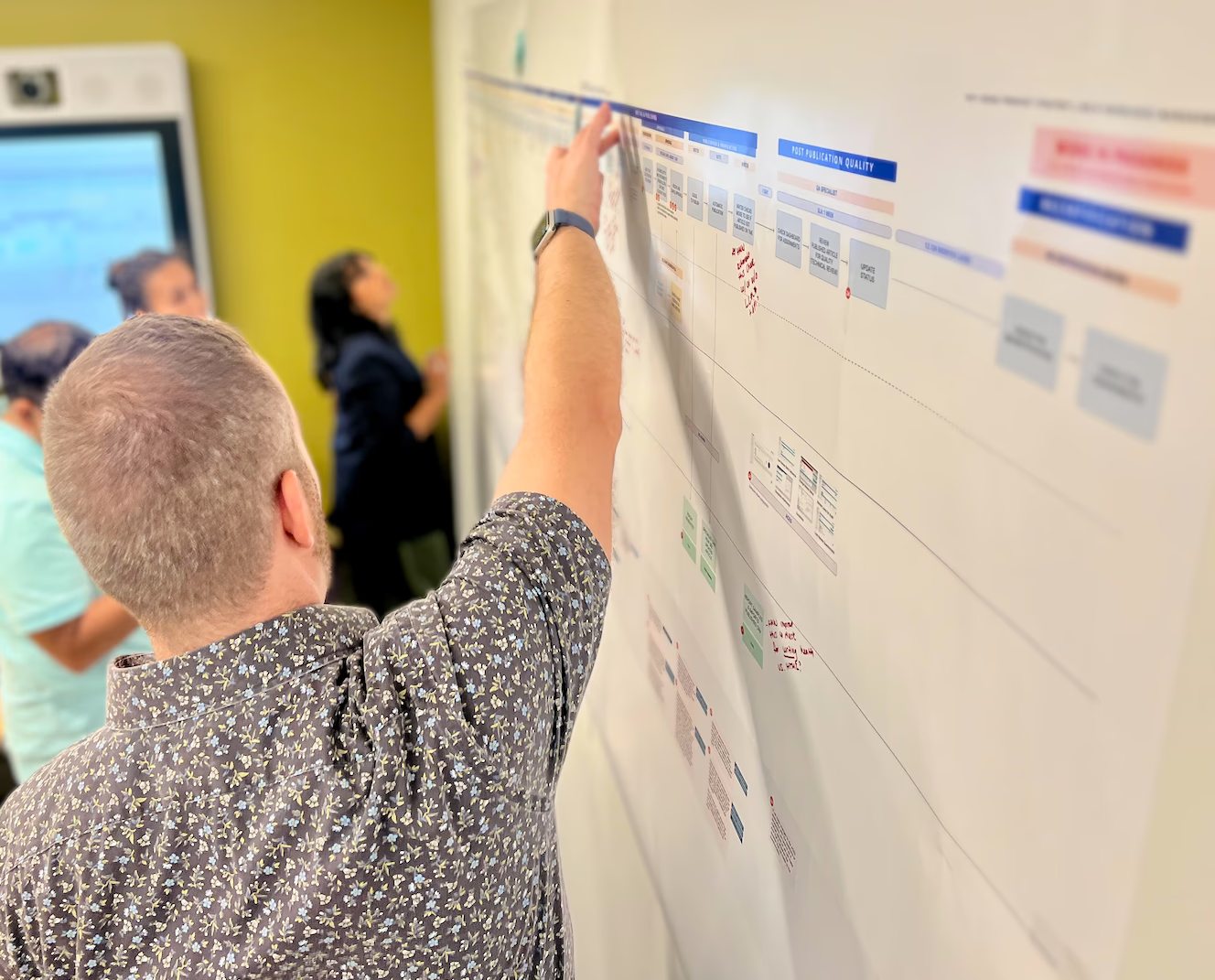
We ran a co-creation workshop with 20+ customers and card replacement specialists, and built the changes from both sides.
What we changed
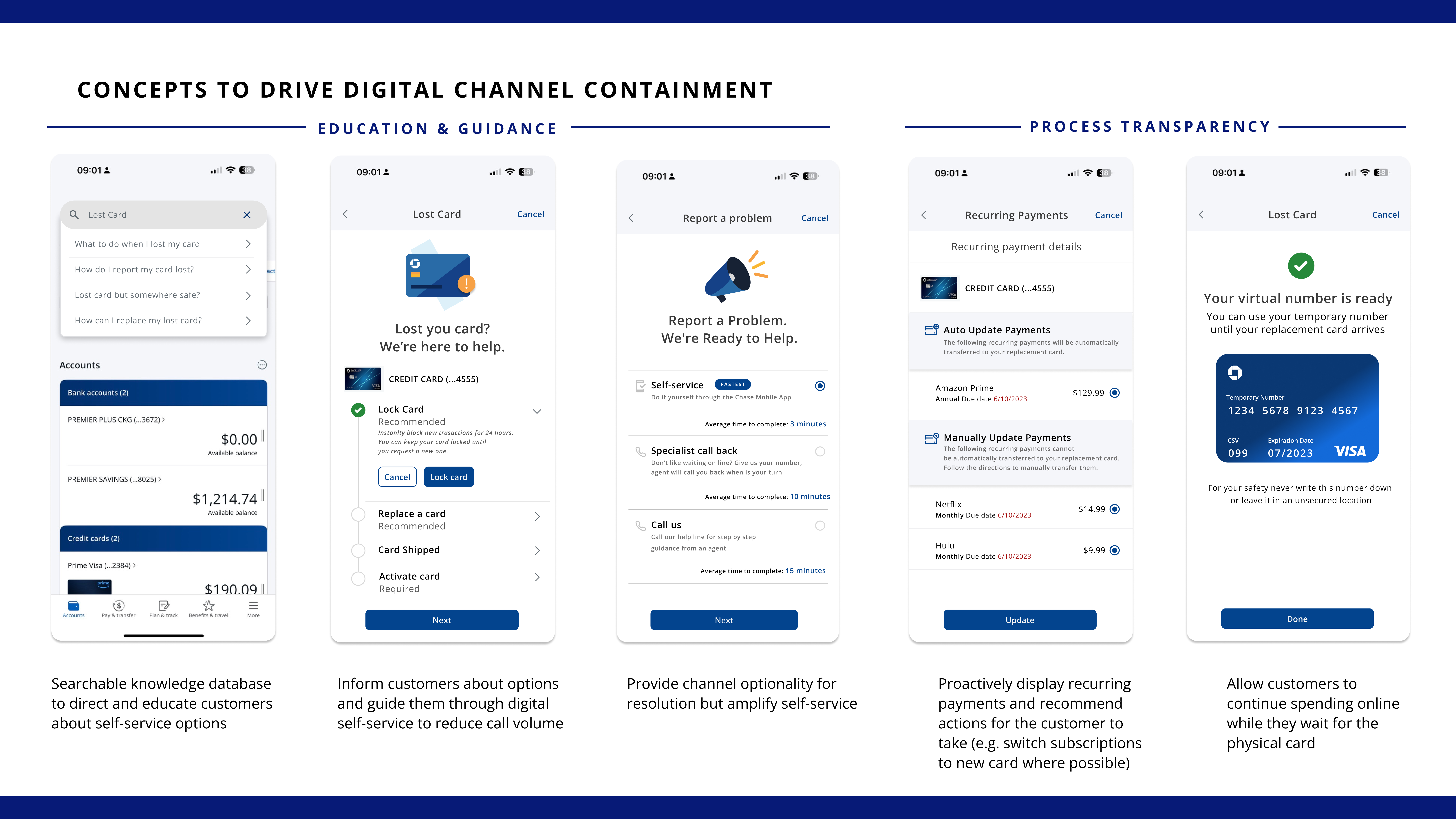
Front stage: a redesigned replacement flow that helps people do it themselves.
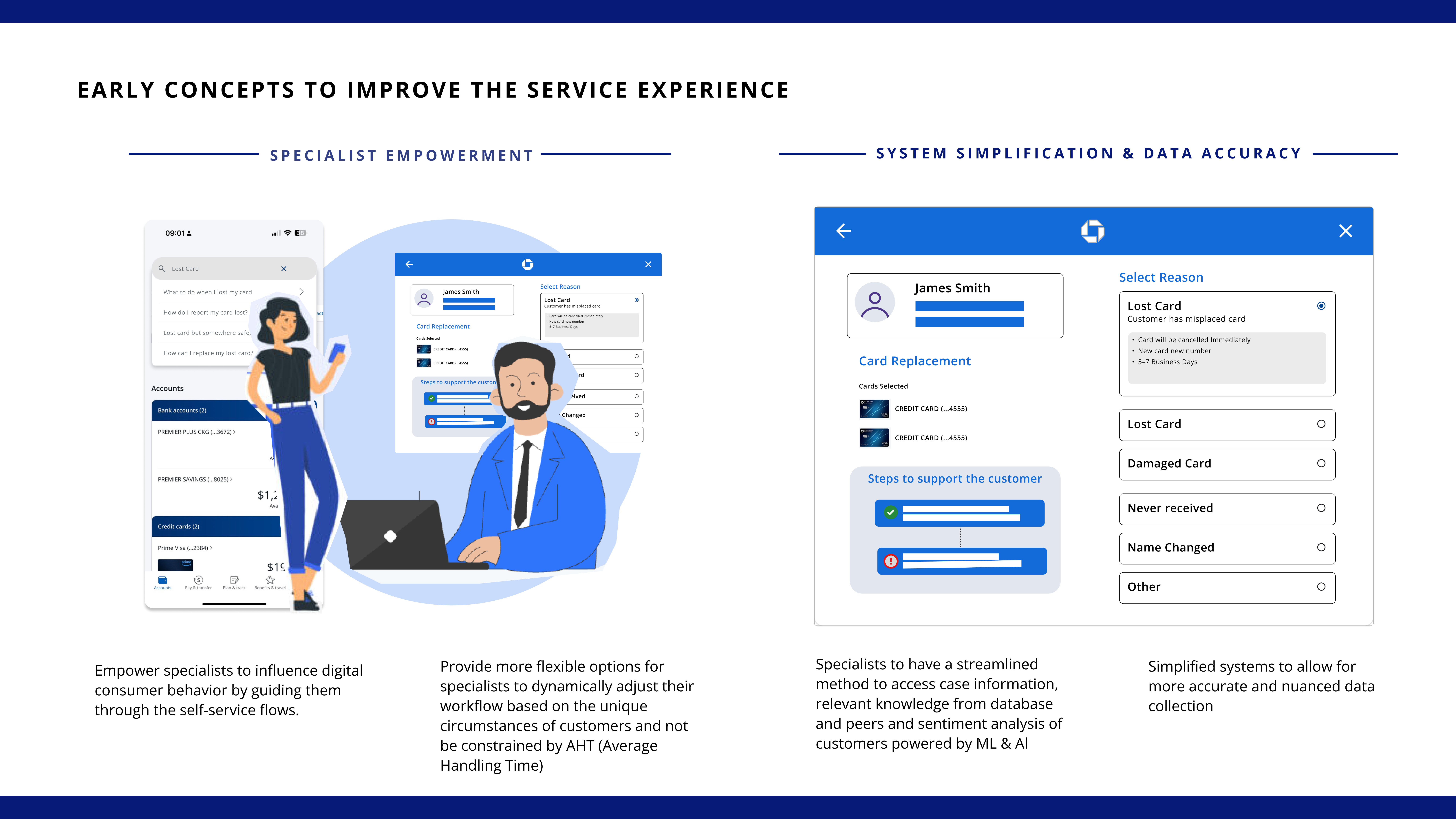
Back stage: simpler support processes, with co-browsing and updated guides for specialists.
What happened
Several changes went live, including a replacement tracker that shows customers where their new card is. We then built the tracker as a repeatable module that other journeys could reuse, so the fix outlived the project. Calls about card replacement fell around 30%, digital adoption rose around 25%, problems were resolved around 40% faster and manual errors fell around 35%.
What I'd take to public services
Most of the fix was behind the scenes: one roadmap, five shared goals and better tools for the people answering the phone. Public services have the same problem, where every department owns a piece of the journey and nobody owns all of it.
More projects
2024–25
One Customer, One View
JPMorganChase · Finance · Platform
About 5 million customers were tagged one way in one system and another way in the next. We designed a fix from the data up.

2024
Content Velocity
JPMorganChase · Finance · AI · Process
Updating the guidance call-centre specialists read from took 10 to 12 weeks. We found where the time went and shaped six ways, three using AI, to get it to two.
Working on a regulated service?
I’m always glad to compare notes with people in finance, healthcare or the public sector, especially if you’re working out where AI belongs.